
A 66-year-old Parisian model the industry now puts on the Forbes list is curvier than the icons you have been told to copy — and better dressed than most of them. I studied her wardrobe piece by piece. Here is what is actually going on, and how to borrow every part of it, at any size.
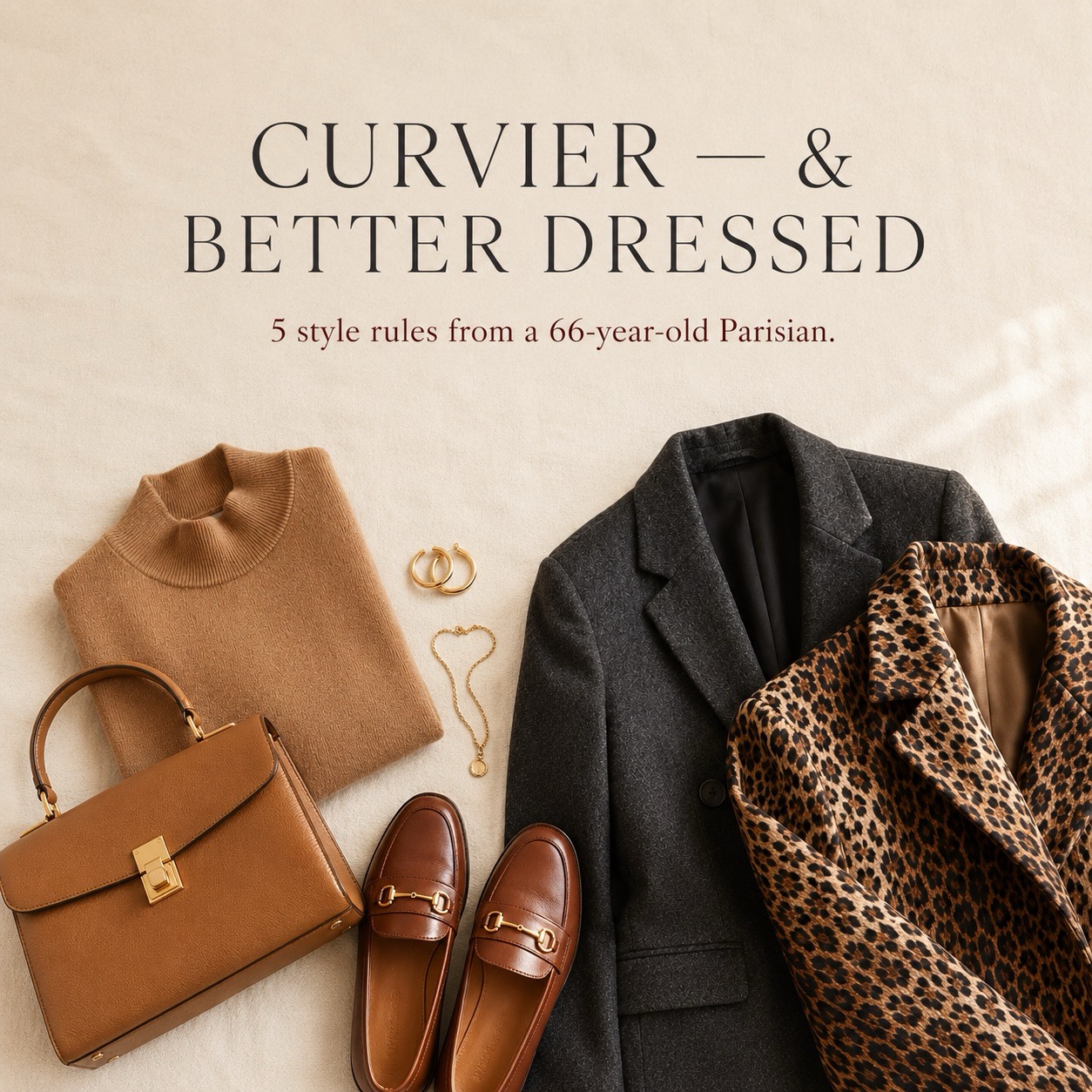
When most people first see how Caroline Ida Ours dresses, they brace for the rule every woman over fifty gets handed: that past a certain size, you are supposed to cover, to drape, to apologise with your clothes and take up a little less room. She does the exact opposite. She is curvy, her hair is long and fully silver, and she dresses to be looked at — not to disappear.
And yet this is a woman the industry now treats as an authority. She spent most of her life in an ordinary job, raising two children, and only became a model after sixty — not the kind the agencies were looking for. In the last few years she has been named to the Forbes France 50 Over 50 list, stood in national campaigns, and built a following around a single idea, which she keeps to four words: no rules, no diktat.
So here is the real question, the one worth answering: why does elegant dressing seem to work on her, on a fuller figure, when we are quietly told it cannot? The answer is not that she is French, or rich, or that she lost weight — she did none of that. The answer is five moves, sitting underneath everything she wears. And not one of them is about getting smaller.
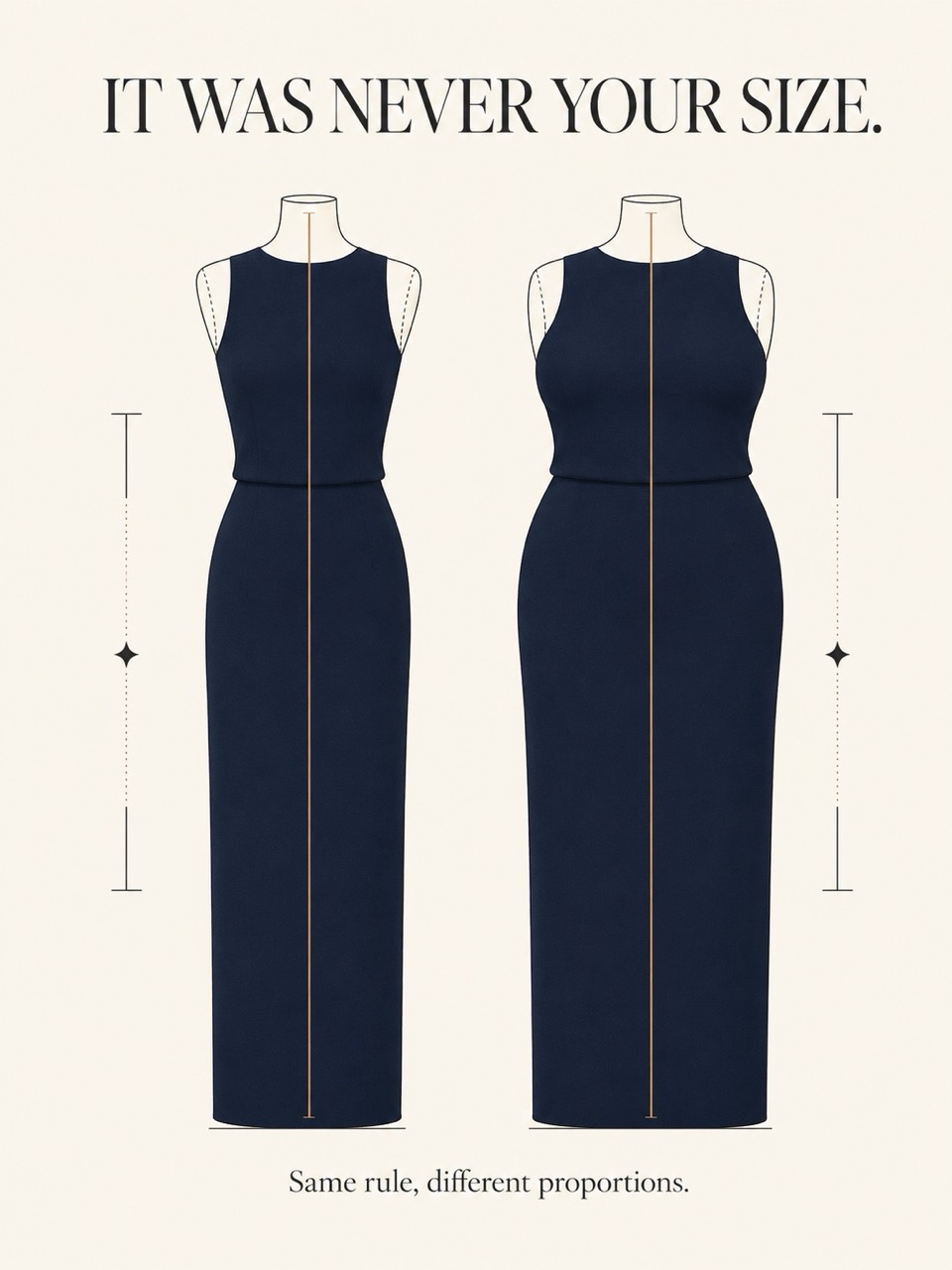
Here is the part nobody tells you. The slim icons you admire are not wrong, and copying them was never your mistake. What makes them look right is their proportions, not their size — and no one ever told you to translate the rule to your own. So you took the pieces that worked on a narrow frame, put them on a fuller one, and stood in the mirror feeling like the failure belonged to you. It never did. It belonged to a rule that left out the one thing that actually matters. Find the pieces cut for your proportions, and the same elegance is simply yours. Here is exactly how she does it.
Move OneThe Mannish Line
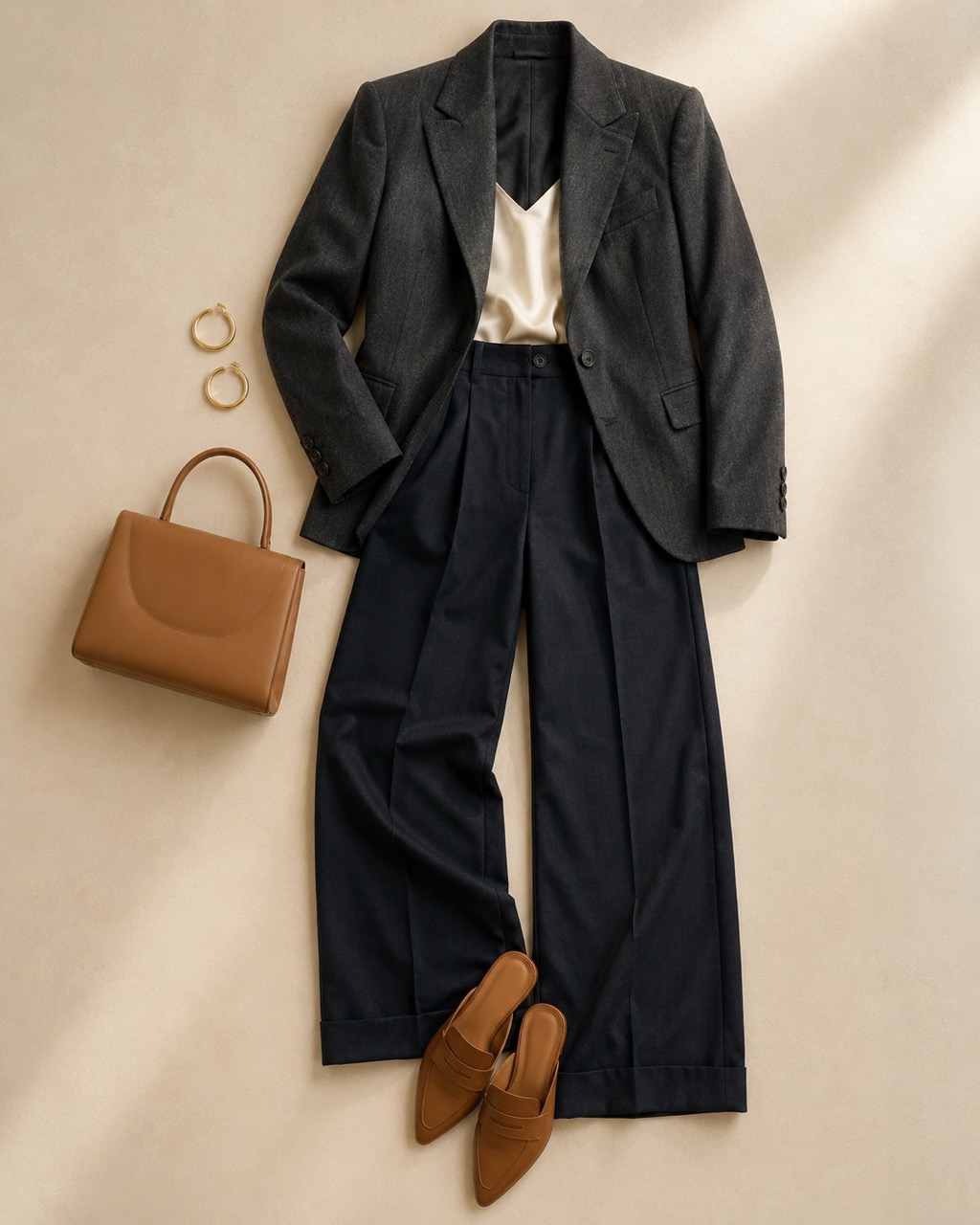
When a woman is told her shape is a problem, she is usually handed something soft and shapeless to hide inside. Caroline does the opposite — she borrows from a man’s wardrobe. A blazer with a real, built shoulder, worn open. A straight wide-leg trouser that falls from the waist to the floor. A crisp collar kept high at the throat. Nothing clings anywhere, and the whole figure reads as deliberate.
Worn open, the blazer draws two long vertical lines down the body, and the wide trouser carries them to the floor. Menswear was cut to hang off a frame, not to grip one — that is the whole secret of it. A fuller figure does not need softer, looser clothes. It needs the clean, falling line that tailoring was built to give.
Look for structure, not stretch. One blazer with a defined shoulder, one wide straight trouser, worn open and long. If you add a white collar, keep it high at the throat — up by your face, where it lifts the eye, not across your middle, where it would cut the line.
Move TwoThe One-Tone Column
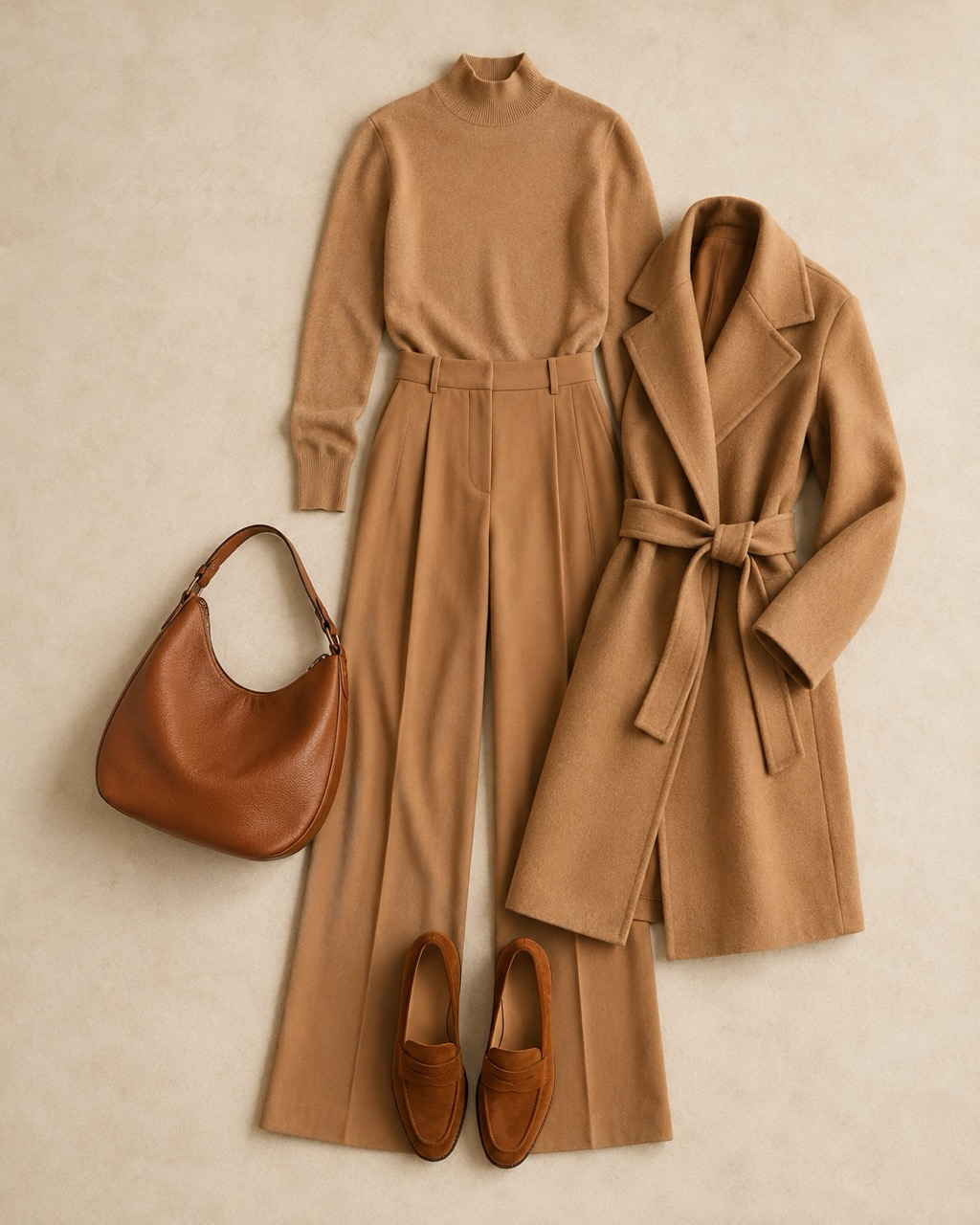
The slim icons can cut themselves in half with colour and get away with it. A fuller figure was never told why it does not work the same way. Put a light top over a dark bottom and you draw a hard line straight across the widest part of you — and the eye stops dead, right there. Caroline does the reverse: one tone, from shoulder to shoe.
Camel on camel. Charcoal on charcoal. A brown suede blazer over a top in the same family, with a boot that does not break the line at the ankle. From the collar to the floor there is no horizontal cut anywhere, so the eye travels the whole length and reads height instead of width. Contrast up at the collar, by the face, lifts the eye; across the middle, it cuts you in half. This is the move for when you want one long, clean line and nothing else.
Pick one colour you already own in several pieces and wear it top to toe. No contrasting belt, no light-over-dark break at the waist. Let any contrast happen up near your face, where you want the eye to land.
“The clothes were never the point. The woman who decided she had nothing left to apologise for — that is the point.”
Move ThreeThe Single Loud Print
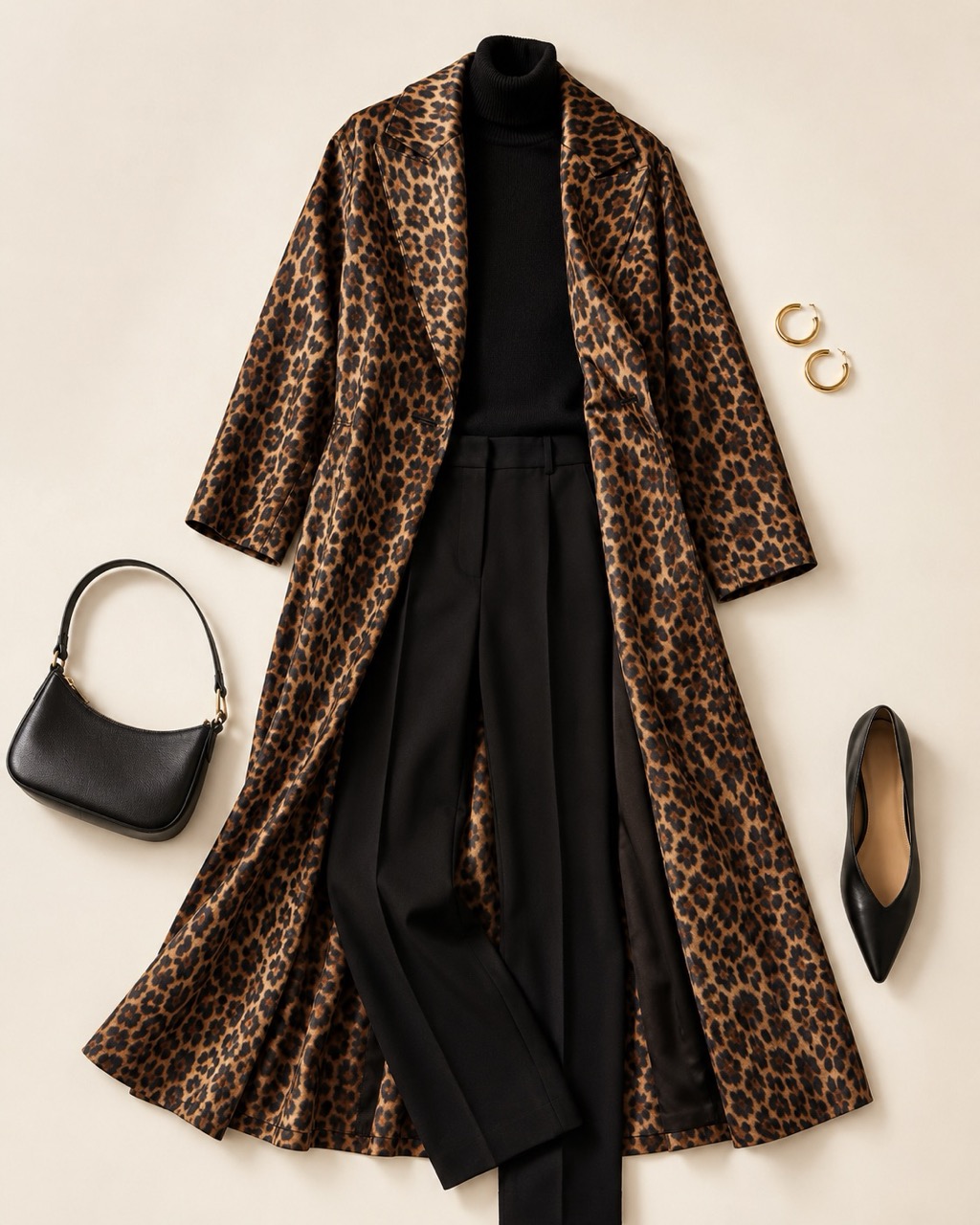
You have a print you love — a leopard, a bold floral, something with real colour in it. And somewhere along the way, someone told you that at your size you should leave it on the rail. They were wrong, and somewhere underneath, you knew it. Caroline wears the loud print constantly. The move is simple: when the print is loud, everything else goes silent.
The print becomes the whole column, top to bottom, one piece doing all the talking. The shoe is quiet. The bag is quiet. There is no second pattern anywhere fighting it. So the eye sees one bold, deliberate statement instead of a busy, broken-up figure. The print was never the risk. Two loud things at once is the risk.
Wear the print you love as the hero — head to toe if it is a coat or a dress — and keep everything else plain and quiet. One loud thing, never two.
Move FourThe Anchored Volume
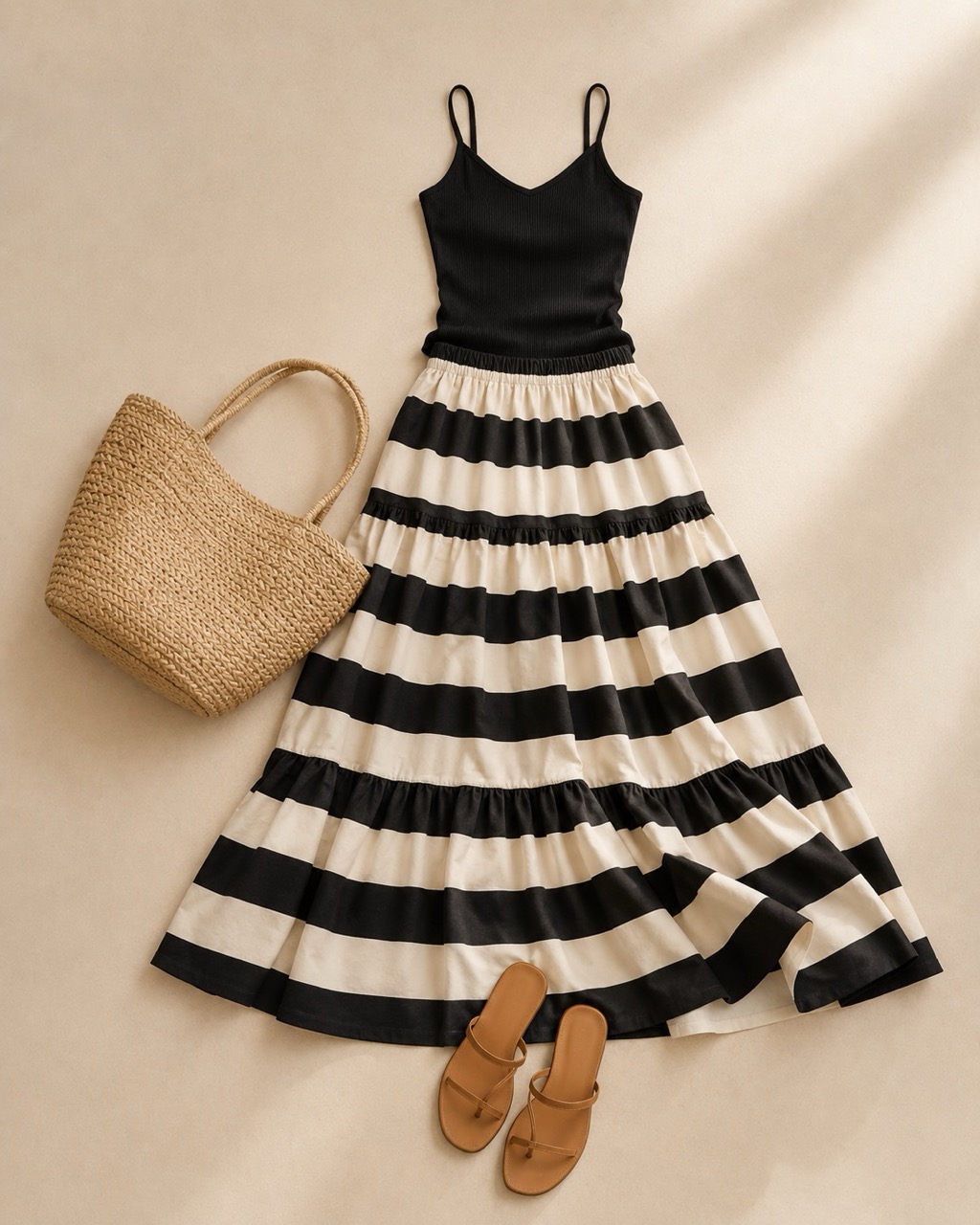
A fuller figure is told, above everything else, to avoid volume. No big skirts, no wide full trousers — stay close to the body, or you will only look bigger. Caroline wears volume constantly, and it never once swallows her. The rule she actually follows is simple: volume in one place only, anchored at one narrow point, so the eye has somewhere firm to land.
A full skirt with a fitted cami on top. Or full, draped trousers with a neat knit tucked in at the waist. The break sits at the narrowest point, where it carves a waist out of all that fabric — not across the widest part, where it would cut you in half.
And here is the honest part: this one is not even a rule. You can ignore the anchor completely — wear something fully oversized, with no waist at all — and still look entirely right. Caroline does it constantly: a coat that swallows her whole, soft and unbroken from shoulder to hem, no anchor anywhere, and it still reads as harmonious. The anchor was never a law. It is only one way to give the eye a place to rest.
If you want shape, keep volume to one half of the body and anchor it at your narrowest point. If you want ease, go fully oversized on purpose — and own it. Both are right; the only wrong version is volume everywhere at once, by accident.
You’ve just seen four of her five moves — here’s how to apply the same thinking to the body and the wardrobe you already have. Add your email for a short run of free style notes from me, starting with the 5 rules that make simple clothes look expensive. The first one lands in a couple of days.
Move FiveThe Unhidden Piece
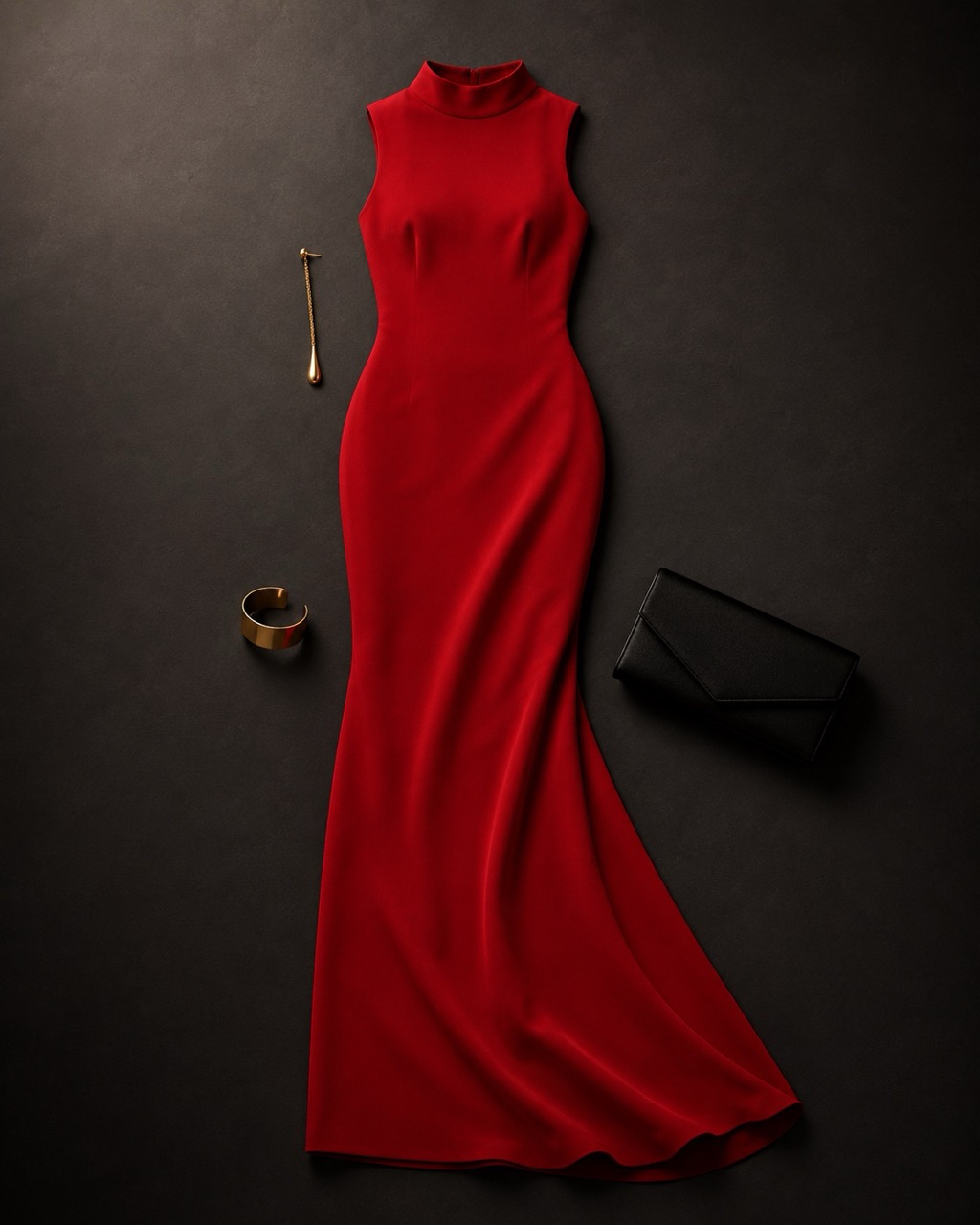
There is a whole category of clothing a fuller woman over fifty is told to give up entirely: the fitted thing, the lace, the slip that follows the body, the dress that was cut to be seen in. Caroline did the exact reverse. She wears black lace. She wears a bias slip that skims without gripping. She stood on the Forbes 50 Over 50 stage in a long, fitted red column dress, in front of everyone.
It works for the same reasons everything else does. The piece meets the body at its narrowest point and then falls. The fabric has weight — a lined lace, a heavier satin — so it hangs instead of clinging. And the neckline is cut to send the eye up, to her face, not down to the part of the body she was once told to be sorry for. That is not a woman hiding. That is a woman who decided, at sixty-six, to be fully seen.
Choose the fitted piece you were told to fold away. Look for weight in the fabric — something that falls from the body rather than grips it — and a neckline that draws the eye up. Then wear it.
The real reason it works
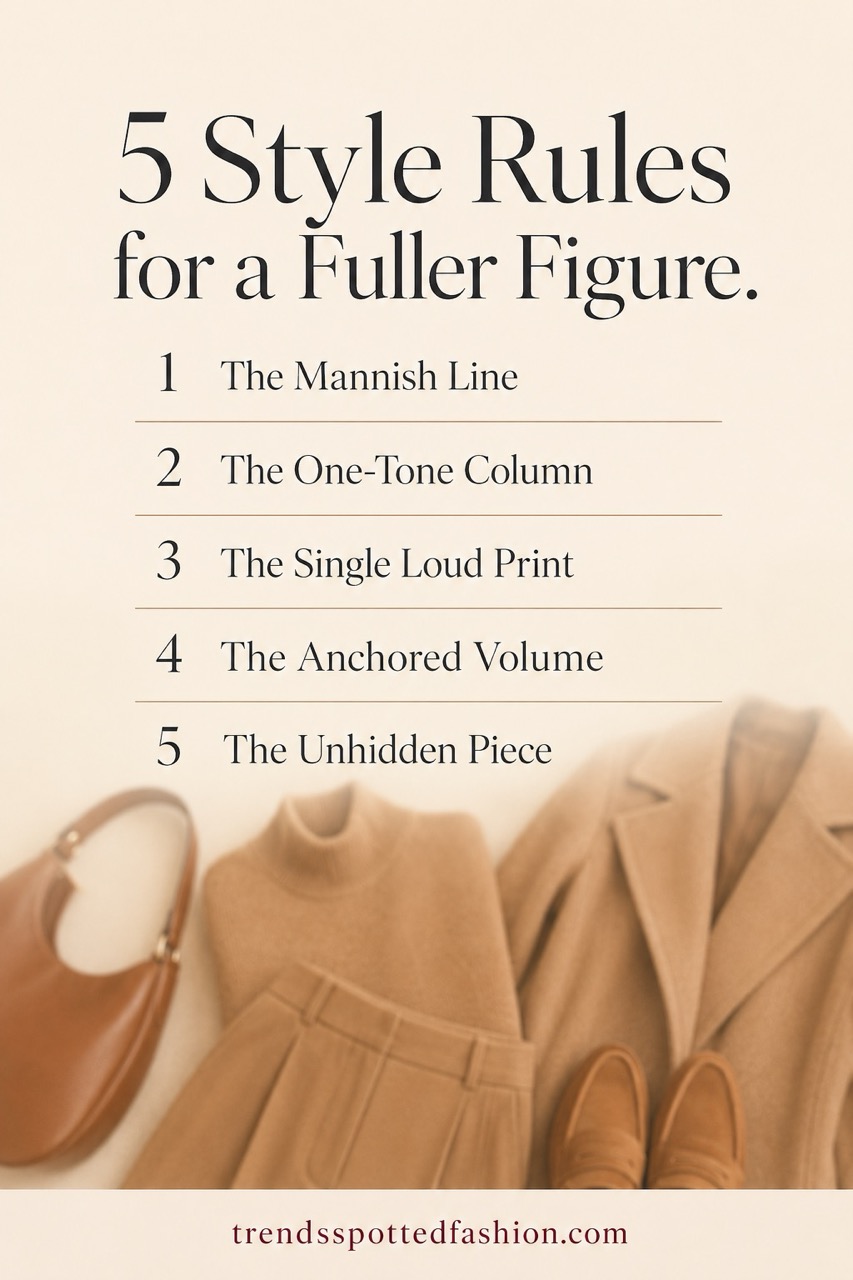
Lay the five together — the Mannish Line, the One-Tone Column, the Single Loud Print, the Anchored Volume, the Unhidden Piece — and notice something. Not one of them is a rule about hiding. Every one is a refusal: a refusal to cover, to apologise, to take up less room than you actually do.
That is the real reason it works on her. Not because she is French, or rich, or because she lost weight — she did not. It is that, somewhere after sixty, she stopped accepting that elegance has a size. It never did. It was always about proportion, line, and where you decide the eye should go — and every one of those is yours, at any size, starting with what is already hanging in your closet tonight.
The Elegant Wardrobe System walks you through building a settled, personal wardrobe from what you already own — cut for your proportions, not someone else’s. The same method underneath all five moves above.
Get the Elegant Wardrobe System — $49
Not sure where you are losing it? Take the free quiz:
Some links above are affiliate links; if you buy through them, Trends Spotted Fashion may earn a small commission, at no extra cost to you. It never changes what I recommend. References to Caroline Ida Ours are for commentary and analysis; all imagery here is original or properly licensed.
Cannot collect videos from this channel. Please make sure this is a valid channel ID.
Error: No videos found.
Make sure this is a valid channel ID and that the channel has videos available on youtube.com.