
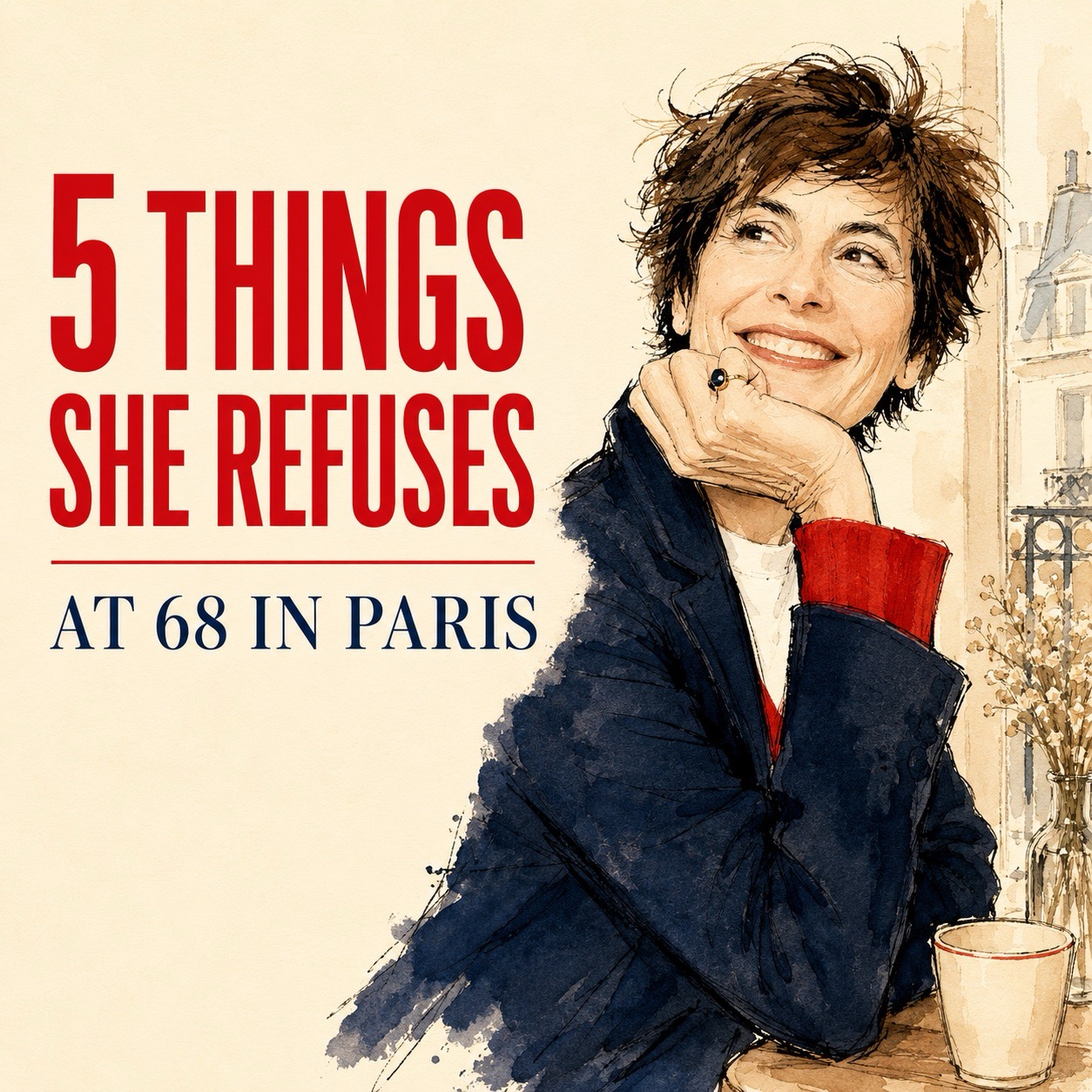
At sixty-eight, in Paris, Inès de la Fressange still looks more current than women a third her age — and it isn’t because of what she buys. I went through every interview, every photograph from forty years of public life. What struck me was not what she wears. It was the five things she refuses to.
There is a piece in your closet right now with the tag still on it. You bought it for a version of yourself you were going to become. And that morning never came. Most women, faced with this, assume the answer is to buy something different next time. To find the right piece. To upgrade.
It is not. The piece was never the problem. The shopping list was.
Here is what almost no one will tell you about the wardrobe of a woman who looks effortlessly elegant past sixty: it is not built by what she puts in. It is built by what she keeps out. At sixty-eight, in Paris, Inès de la Fressange has worn more or less the same handful of clothes for forty years — a man’s blazer, a navy sweater, flat shoes, jeans without a single rip — and she still looks more current than women a third her age. The reason is not what she buys. It is the five specific things she has refused to put on her body for nearly four decades.
She was Karl Lagerfeld’s muse — the first model in history to sign an exclusive contract with a luxury house. She has a thirty-year ambassadorship with Roger Vivier, a book on Parisian chic, her own brand. She knows clothes from the inside. And what she has said, again and again, in every interview from 1991 to 2024, is something the industry will never put on a magazine cover: nothing should be expensive. The wealthiest people are rarely the most stylish. A denim shirt from a chain store can read just as well as one from a luxury house — if you know what not to put on with it. What follows is what she will not put on with anything. Five refusals, in her own words, with the small decision you can make tomorrow morning underneath each one.
Refusal OneThe Endurance Test
She refuses shoes she has to endure. And what she said about this, in a 2012 interview, should have been the headline of every fashion magazine that year: “I understood very late that you have to be a bit comfortable. It is sad that all that you know when you are old, you learn when you are young.” In other words — she wasted years in shoes that hurt. She found her own truth almost too late.
And if you have already given up the shoes that hurt — you did not fall behind. You arrived on time. You figured out, on your own, what took her decades to admit. Then the mechanism, in her own words from another interview a few years later: flat shoes are sexier than high heels. Not more comfortable. Sexier. Because in her view there is nothing less elegant than a woman who is visibly trying. A woman wincing every six steps reads as trying. A woman who has not sat down in twenty minutes because her feet are too sore to stand up again reads as trying. The shoes that hurt are sabotaging the rest of the outfit you spent two hours choosing.
Her own everyday shoe, by her own admission, is a pair of seventies black boots she trusts completely. Not heels. Not couture. Boots she can walk in for eight hours.
Before you leave the house tomorrow, ask one question about the shoes already on your feet: can I walk in these for two hours without thinking about my feet? If the honest answer is no, those shoes belong at a wedding, not in your daily rotation. Endurance is not elegance.
Refusal TwoThe Hand Tell
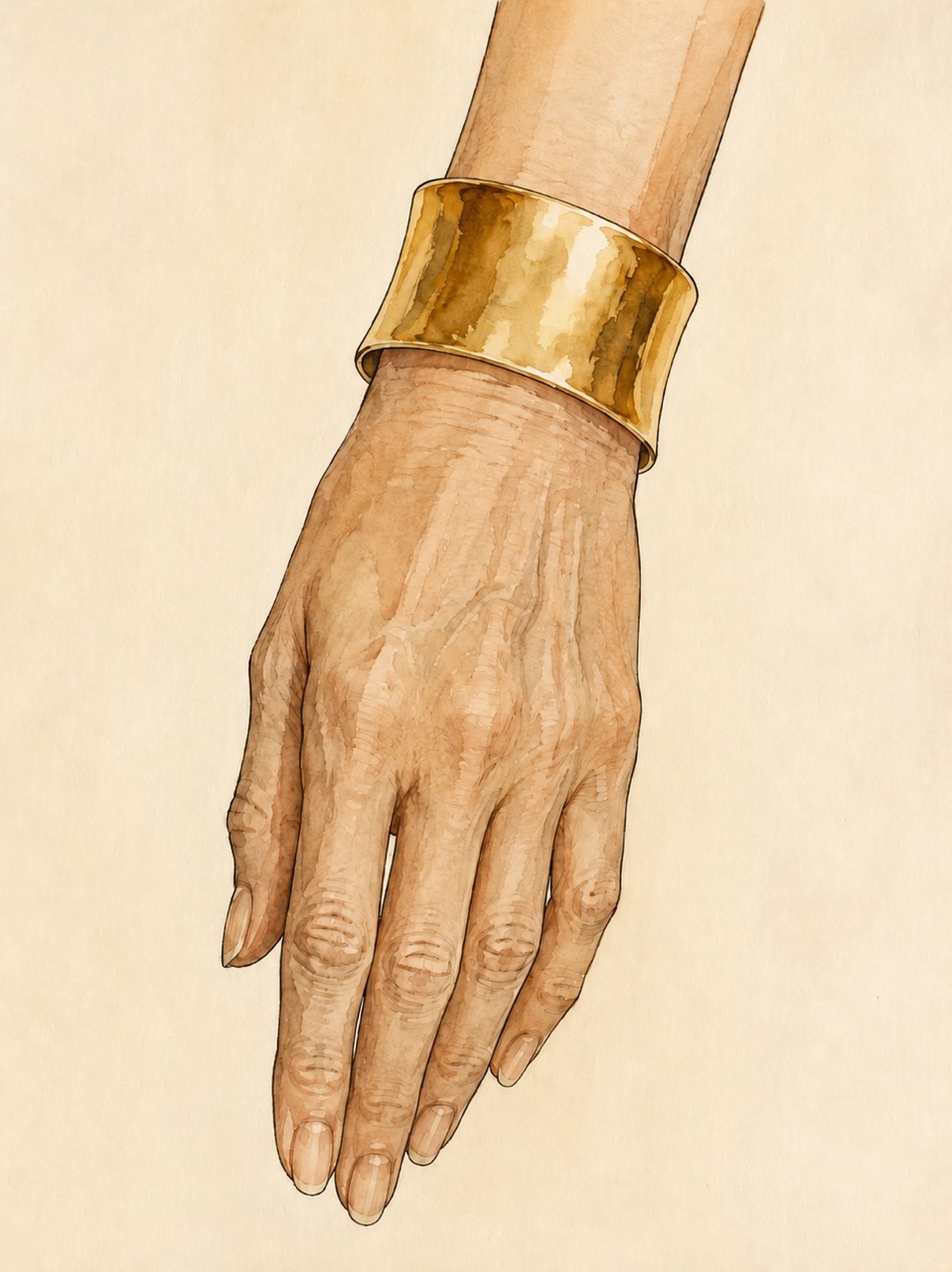
She refuses to stack jewelry on her hand. In a 2012 interview she gave a list, word for word, that has been quoted in fashion writing ever since: “Earrings, and colour, and necklace, and the lipstick, and fake eyelashes, and fake hair — it’s a nightmare.” Notice the order. She does not start with the obvious things. She starts with the hand. Because the hand is where age reads first.
And the worst offender, in her own words, is the layered ring. The engagement ring. The wedding ring. The ring for the first baby. The ring for the second baby. All worn at once. That, she said in Harper’s Bazaar, dates a hand faster than wrinkles do. “A little shell on a cotton thread would be better.”
And if you have ever taken off one piece before leaving the house and felt instantly lighter — that was not a feeling. That was the Hand Tell. You already know. She herself does not refuse jewelry. She wears one statement piece, often the same wide gold cuff, and stops there. She refuses to add when she has already worn enough.
Pick the one piece your hand carries today. A single bracelet, or a single ring — not both, not stacked, not layered. Then refuse the rest. The discipline is in stopping after the first one, not in finding the second.
Refusal ThreeThe Logo Tax
She refuses to dress head to toe in luxury brands. This is where her position is most countercultural — and most useful for the woman watching. In 2024 she gave an interview to the official Paris fashion federation, and she said something extraordinary about how Parisian women actually shop: “Parisian women don’t necessarily seek the guarantee of famous logos.” The women who define French style do not buy by brand.
She tells the same kind of story over and over. A girl walked into a fashion show in a printed dress. Inès was certain it was Marni. She asked the girl where the dress came from. The girl said: “It was my grandmother’s.” That moment, in her telling, was more elegant than anything else in the room. A 2025 luxury jacket worn over a vintage shirt — chosen. Two thousand euros of head-to-toe designer — bought.
When you wear one brand from neckline to ankle, the person disappears. The clothes wear you. When you mix one good piece with one thing from a high street store, one thing from a flea market, one thing inherited — the person reappears. You wear the clothes. And if you have ever paired your favourite piece with something cheap and felt the outfit got better, that was not an accident. You already understood the Logo Tax. You just did not have the name for it.
No outfit should look like it came from one shop. The pieces Inès has been wearing for forty years are the opposite of luxury statements — they are quiet, classic, mixable, and they almost always sit alongside something cheaper.
“Nothing should be expensive.” — Inès de la Fressange, 1991
You’ve just read three of her five refusals — here’s how to bring this thinking to the clothes you already own. I’m sending a short run of free dressing notes written for new subscribers only: three letters over a few days that take you step by step through the small decisions Inès makes every morning. The run is closed after that, and it is not republished.
No spam. Unsubscribe in one click.
Refusal FourThe Decade Test
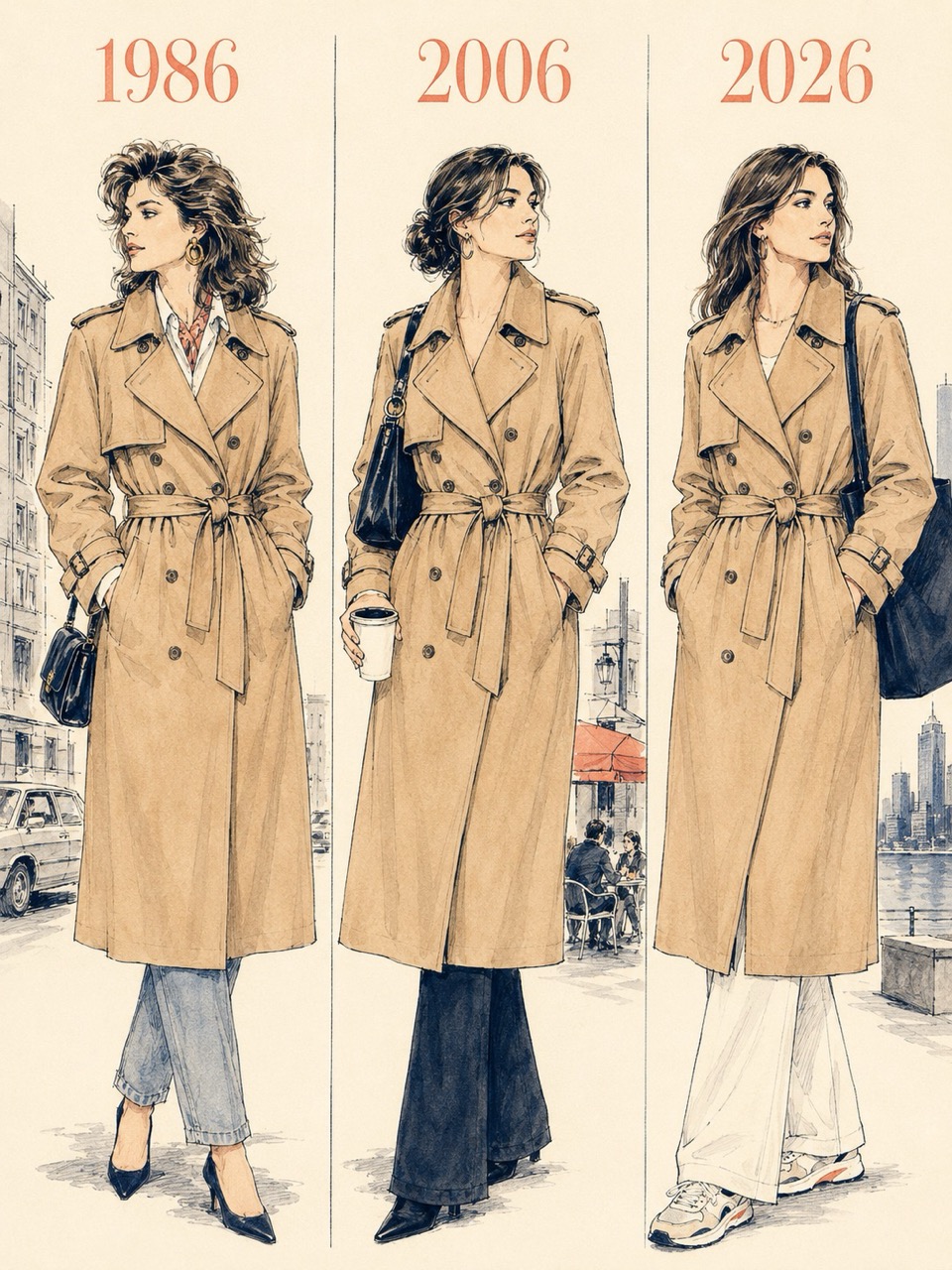
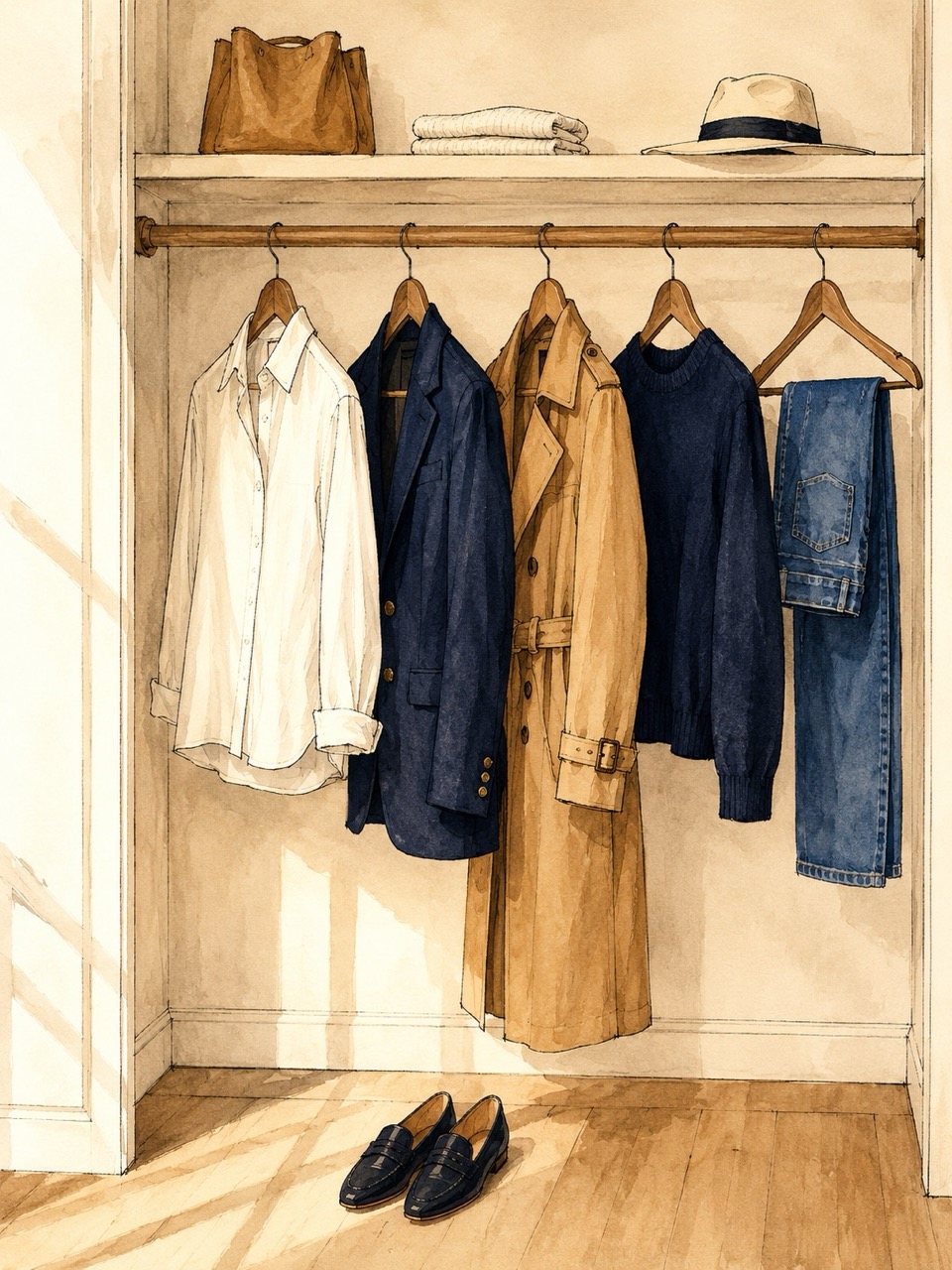
She refuses to buy anything that will not still read right in ten years. The trench coat she wears in 2026 is a version of the one she wore in 1986. The navy sweater she wears in 2026 is a version of the one she wore in 1991. The white shirt she has worn — for every photograph, every campaign, every street shot — for thirty years. She does not add to her wardrobe. She replaces, in the same shapes.
In a 1991 interview, opening her first boutique on Avenue Montaigne, she said exactly this: “Making ready-to-wear, but without a revolution. I wanted basic pieces. Simple white blouses. A straight skirt. A blue blazer.” Forty years ago, she had already decided what she would wear for the rest of her life. And she refused everything else. Most women’s closets, by contrast, are full of pieces tied to a specific season. The colour of that year. The print of that month. The sleeve length that was on every catalogue cover for six weeks and then disappeared.
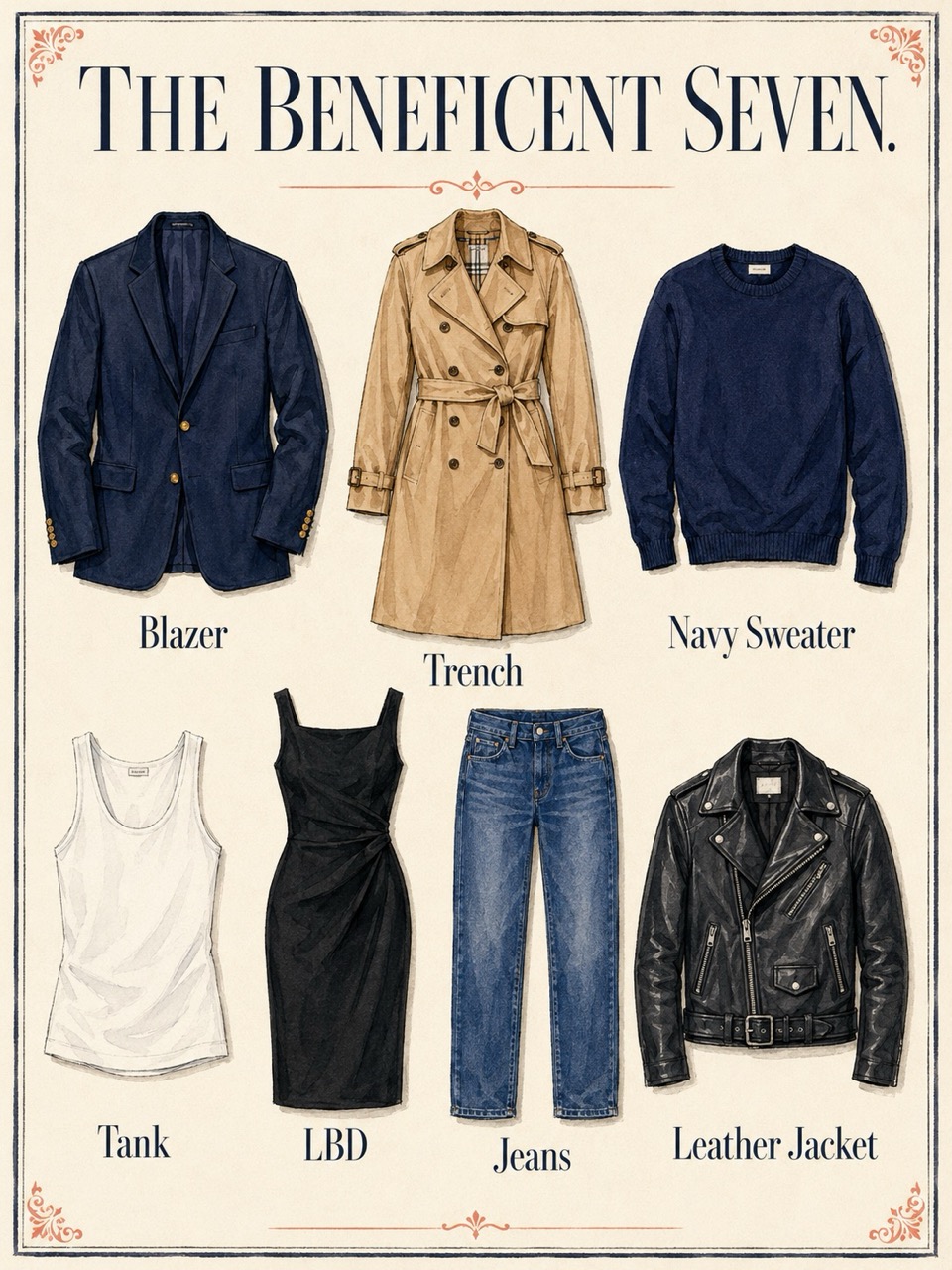
Every trend has a half-life. A piece tied to a trend stops working when the trend stops working. A piece tied to a shape works as long as the shape suits you. The white shirt, the navy sweater, the cropped jean, the trench — these are shapes, not trends. If you have one piece in your closet you have worn happily for a decade, that is the only piece you should be replacing.
Before buying anything new, ask one question: will I wear this in ten years? If the honest answer is no, refuse it. Buy shapes, not seasons. The shapes below are the ones Inès has been quietly replacing, in the same silhouette, for forty years — they are the closest thing to a wardrobe that ages forward instead of backward.
Refusal FiveThe Costume Effect
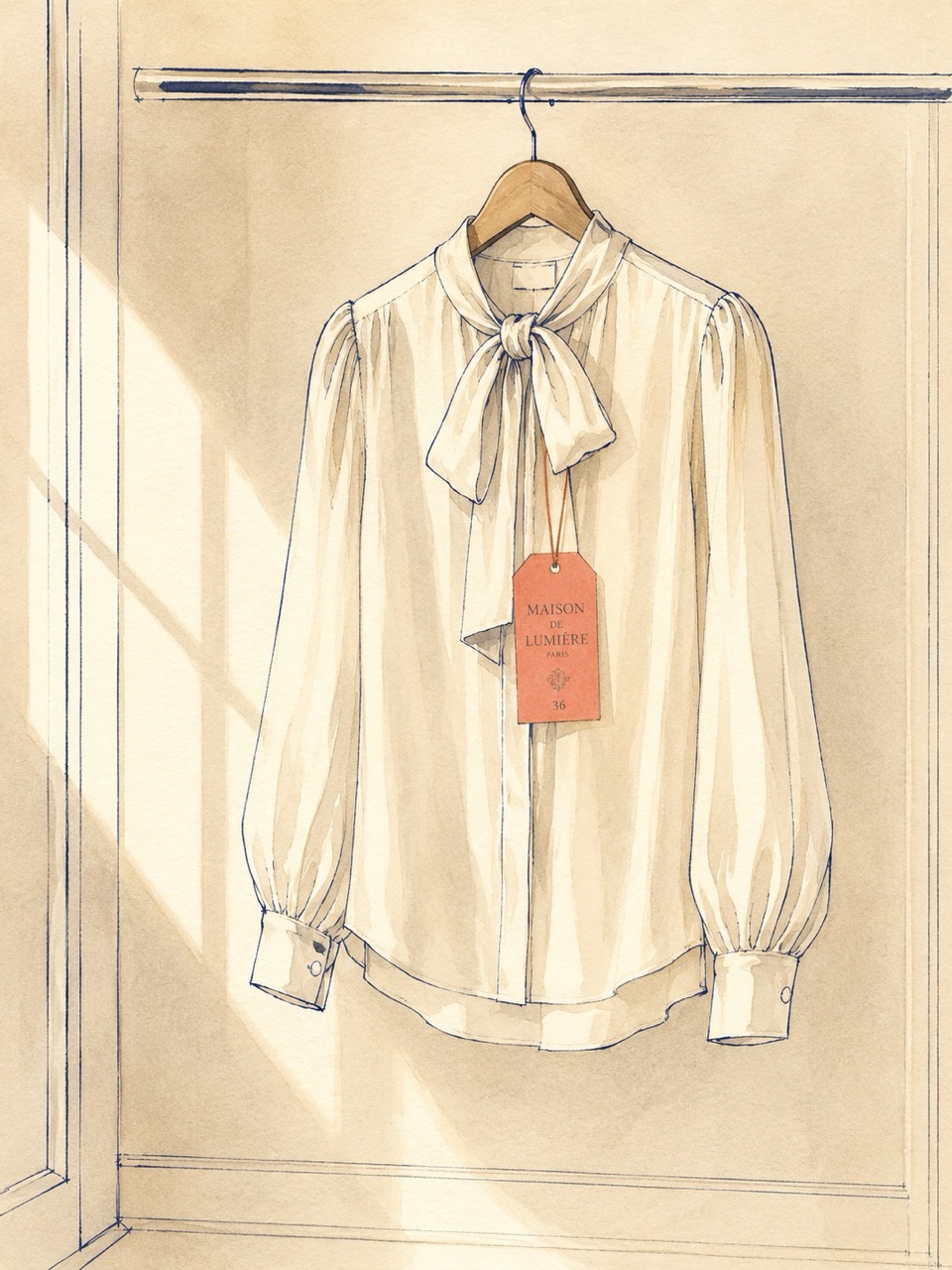
She refuses to look like she walked out of a magazine. This is the most important refusal — and the one most modern style content has gotten exactly wrong. Magazines style outfits to be photographed. A real woman dresses to be lived in. When everything in your outfit was chosen at the same time, for the same look, from the same shop, you read as styled. Not chosen. In her own words: “No one should look like they have just walked out of a magazine.”
The bag matches the shoes. The shoes match the belt. The belt matches the scarf. It looks correct. It looks lifeless. A coordinated outfit reads as a set. A slightly mismatched outfit reads as a choice. Inès has built every famous outfit of her career on one small rule: one thing in the outfit should not match anything else in it. A vintage necklace with a contemporary silk shirt — chosen. A magazine-page outfit — bought.
And here is her permission, which matters more than the rule. She has said she has a wardrobe crisis most mornings too. She stands in front of her closet with nothing feeling right. She is not refusing to look like a magazine because she always has it figured out. She is refusing to look like a magazine because she knows real life looks slightly imperfect. The experiments that do not quite work are not failures. They are the difference between a real woman and a magazine page.
When the outfit feels too coordinated — and it usually does — throw in one thing that does not belong. A vintage scarf. An inherited belt. A blouse with a soft, slightly old-fashioned detail like a bow at the neck. One small piece that breaks the matched set is what turns a costume back into a choice.
The one word underneath all five
In a 2024 interview with the Paris fashion federation, Inès used a single word to describe her approach to her own clothes. The word was pruning. Her exact line: “I’m pruning. Less fussy, less make-up, less hairstyle. More letting go. And above all, not trying to be like before. Moving forward.” Pruning. Not adding. Not updating. Cutting back. That is her word, not mine — but once you hear it, every refusal in this article rearranges itself underneath it.
The Endurance Test — refuse the shoe that hurts. The Hand Tell — refuse the extra ring. The Logo Tax — refuse the matched designer set. The Decade Test — refuse the trend. The Costume Effect — refuse the magazine page. Every one of them is a removal, not an addition. That is the whole secret. Not more pieces. Not more money. Less.
So here is your permission for tomorrow morning. Open your closet. Find the piece you bought for the morning that never came. Take off the second bracelet. Put on the shoes you can walk in. You don’t need a new wardrobe. You need to refuse the things that have been quietly aging your outfit for years — and you already own everything else.
The Elegant Wardrobe System walks you through the same five-refusal thinking, applied step by step to your own closet — what to keep, what to quietly let go of, and the small handful of shapes that will carry you for the next decade.
Get the Elegant Wardrobe System — $49
Not sure which of the five refusals is quietly aging your outfit? Take the free quiz:
Some links above are affiliate links. As an Amazon Associate, Trends Spotted Fashion earns from qualifying purchases, at no extra cost to you — and it never changes what I recommend. References to Inès de la Fressange and direct quotes are drawn from her published interviews with Harper’s Bazaar UK (2016), MOJEH (2025), Into The Gloss (2012), Alain Elkann Interviews (1991) and the Fédération de la Haute Couture et de la Mode (2024); all imagery here is original or properly licensed.
Cannot collect videos from this channel. Please make sure this is a valid channel ID.
Error: No videos found.
Make sure this is a valid channel ID and that the channel has videos available on youtube.com.
I have many of the same clothing items for years and they don’t get old. The bow blouse, the white shirt…but one thing I will not give up is my red trench coat which I’ve worn in Paris. I’m on my second one, having worn the first one out. I also have a light blue trench. As for the rest, I agree with most of what Inez says.