
She is sixty-four. She wears a flat sandal with a dress most people would save for a wedding — and it works. She moves from a deep red column to a yellow print to head-to-toe navy without ever looking like she is trying. The easy word is chameleon. It is the wrong word. Here are the six small techniques behind a woman who dresses however she wants, and looks expensive doing it — all of them copyable from the clothes already in your closet.
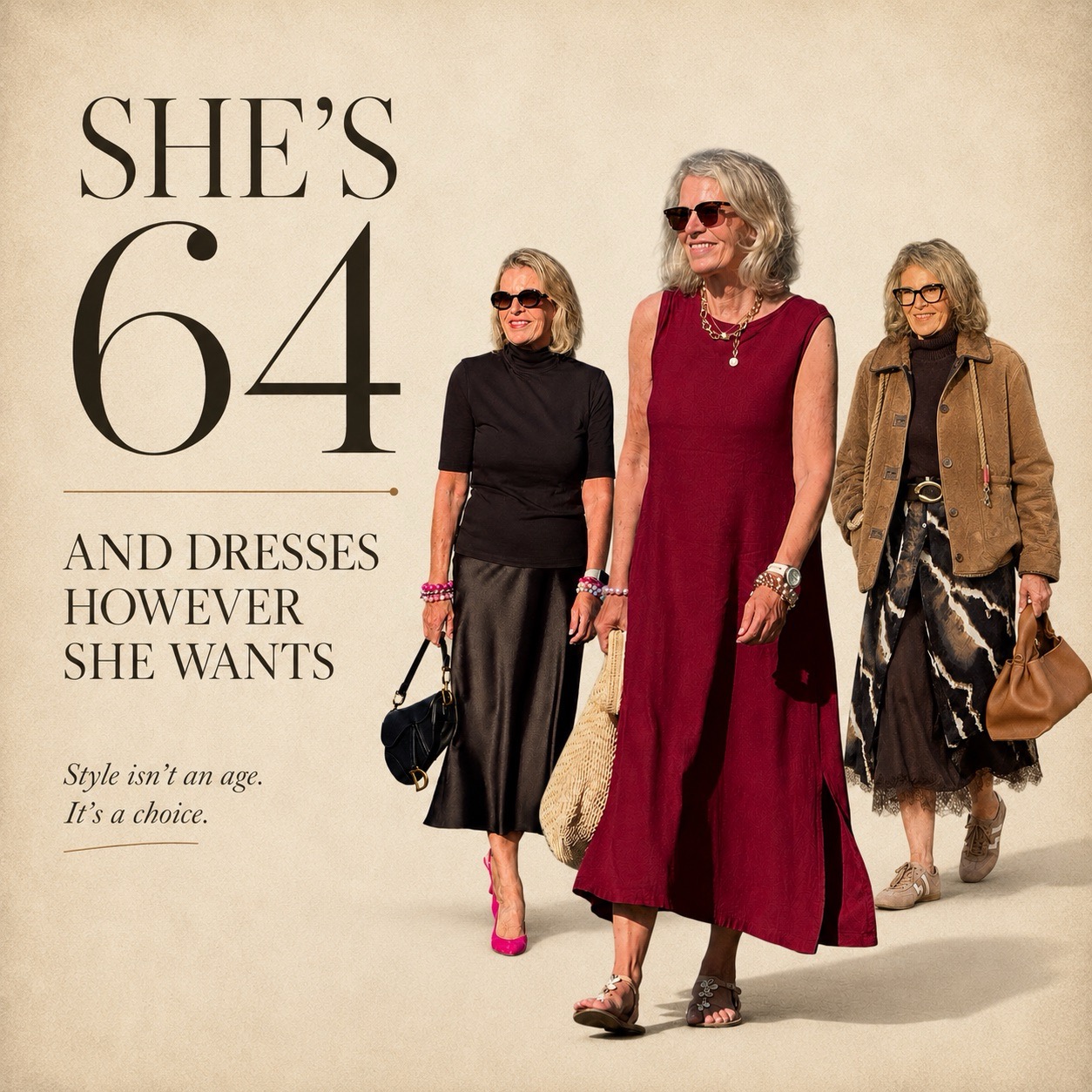
Her name is Sabine. On her own page she does not call herself sixty-four years old — she writes sixty-four years young, and underneath it, two words: ageing with joy. Most people read that as a caption. Read it instead as a method. Because the fashion world tells women, in a hundred small ways after fifty, to choose a lane: classic or modern, covered or confident, safe or seen. It hands you a shorter and shorter list of what you are still allowed to wear, and calls that list elegance.
Sabine ignores the list. And in every look — the loud one, the quiet one, the one a thirty-year-old would call trendy — she is unmistakably herself. She is not changing to match the clothes. The clothes are bending to match her. That is not luck, and it is not a budget. It is a set of decisions, and you can make every one of them. Here are the six, starting with the one your eye registers first.
Technique OneThe Confidence Block
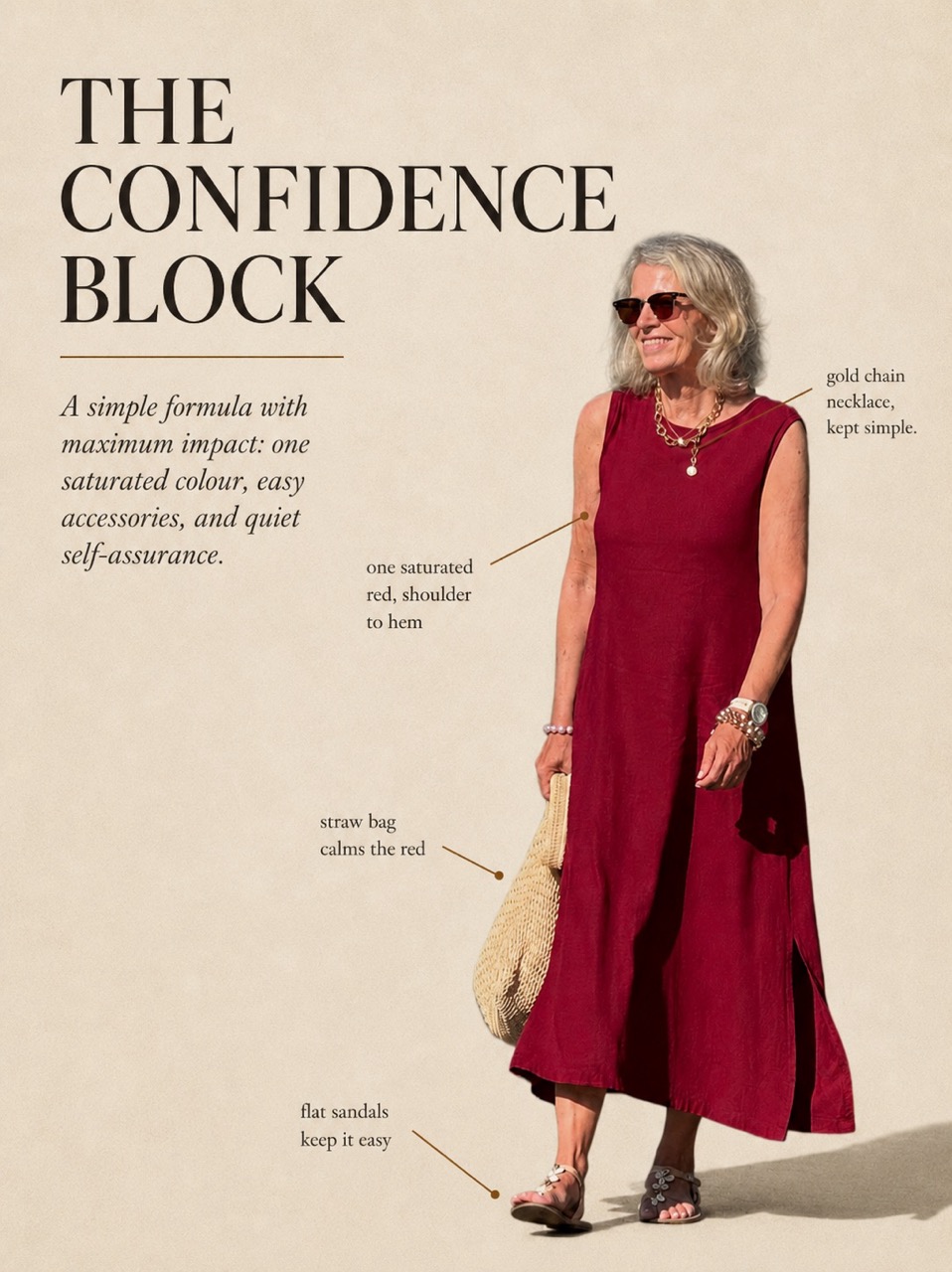
One colour, worn straight on, from the shoulders to the hem. A deep, unbroken red — no print to hide behind, no clever layering. Most women are taught to fear this, because one strong colour “draws attention.” Yes. That is the point. When you wear a single saturated colour as a full block, the colour becomes the subject of the outfit — not your waist, not your arms, not the year you were born. The eye reads the colour first, the woman second, and both as deliberate.
You see her make the same move in a coral coat over white, and again in a grass-green knit with simple denim. Different colours, identical decision: one strong tone, allowed to be the whole story, with everything else kept calm so it can sing. To borrow it, pick one colour you genuinely love — not one you think is “appropriate” — and wear it as a block, with nothing fighting it. That is not loud. That is a woman who has decided.
Shop the dark red midi dress →
Technique TwoThe Anchored Print
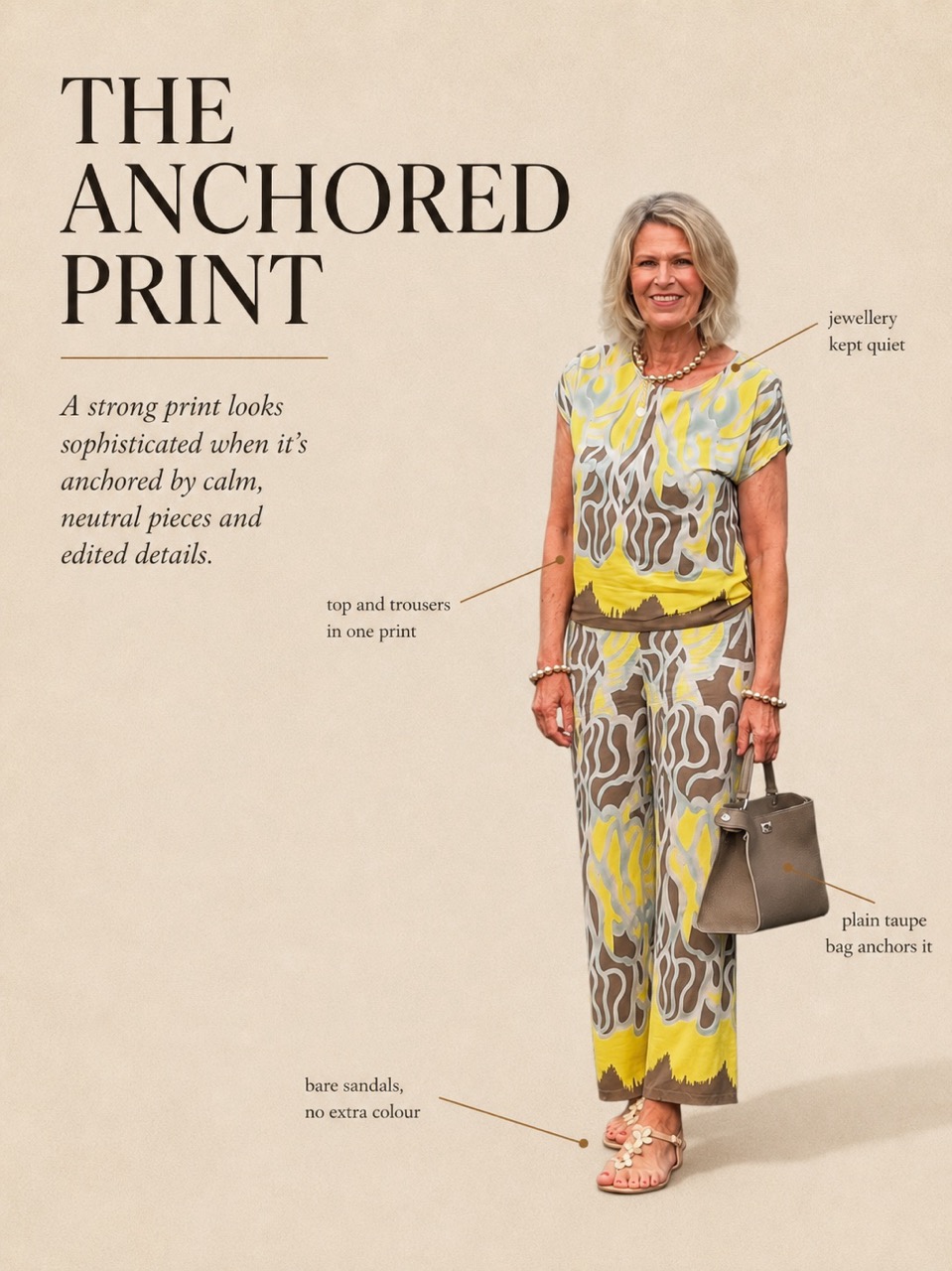
This is the answer to the question every woman asks about pattern: how do I wear a bold print without looking like I am in costume? A loud pattern is only loud when nothing in the outfit is holding it down. Sabine wears a printed top and a printed bottom in the same busy pattern — which should read as chaos — and it reads as calm, because of what she puts with it: a plain solid bag, bare sandals, no jewellery competing for the same attention.
Give a print one quiet, solid anchor — a neutral bag, a plain shoe, a single block-colour piece — and it stops reading as an accident and starts reading as a choice. The print gets to be expressive; the anchor does the grown-up work. To borrow it, wear whatever pattern delights you, and pair it with exactly one solid, calm neutral.
Shop the printed set →
Technique ThreeThe High-Low Handshake
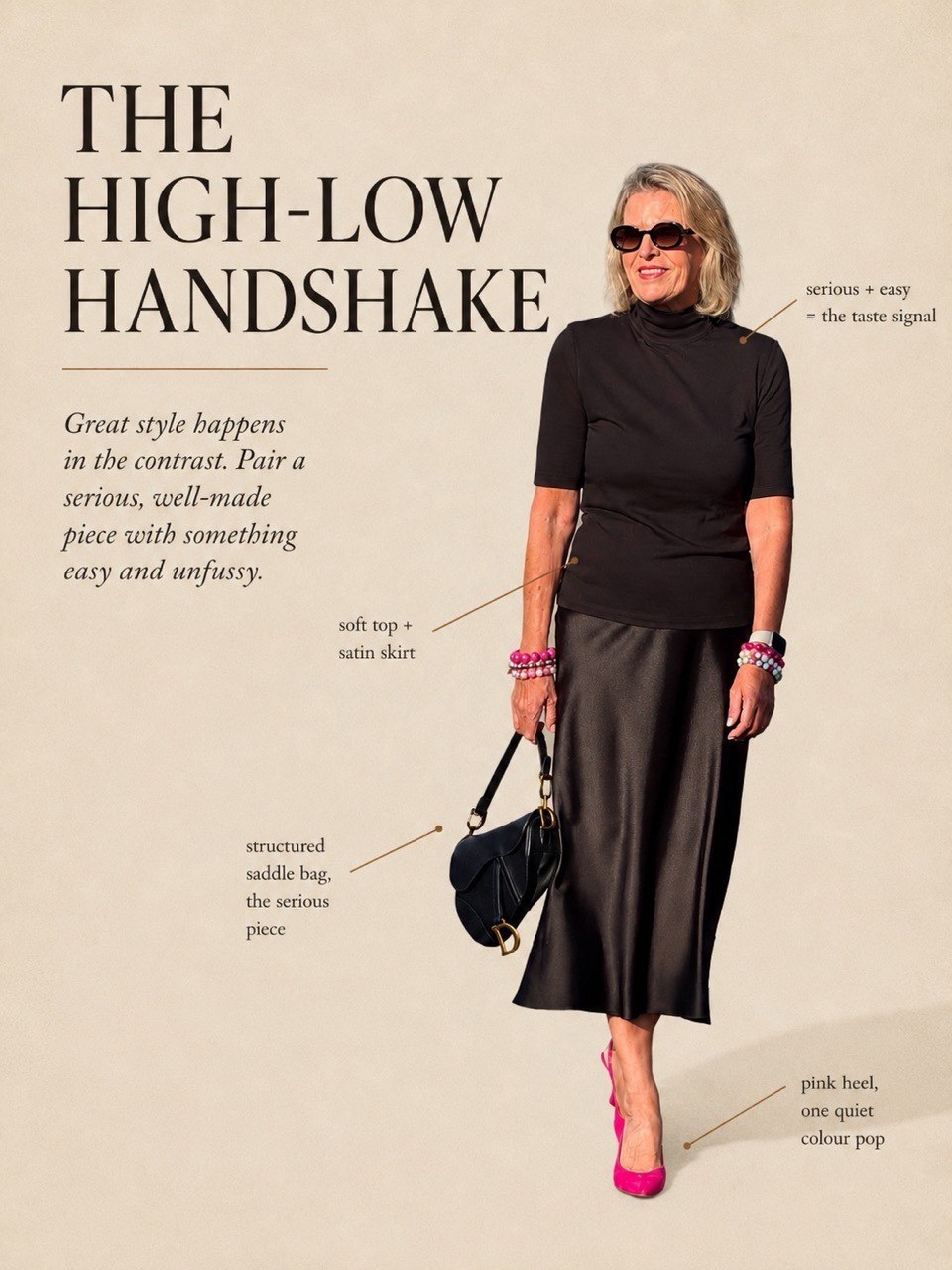
This is the move that signals taste, and almost nobody names it. She takes something serious — a real, structured, well-made bag — and shakes hands with something completely relaxed: a soft tee, a linen dress, a satin skirt, flat shoes. When everything in an outfit is equally done, it tips into stiff. When everything is equally casual, it reads as careless. One serious piece beside one easy piece says something specific.
It says: I know exactly what this is worth, and I am relaxed enough not to perform it. That ease is the actual luxury — not the bag, the attitude toward the bag. To borrow it, take your best, most grown-up accessory and wear it with your most comfortable, least fussy outfit, on purpose.
Shop the structured bag →
Meet The Style Principles — a free visual guide, and a preview of Volume One inside the Elegant Insider Club. Made for women 50+. Save it to your phone and check it before you get dressed. Add your email and I’ll send it over.
Technique FourThe Single-Tone Column
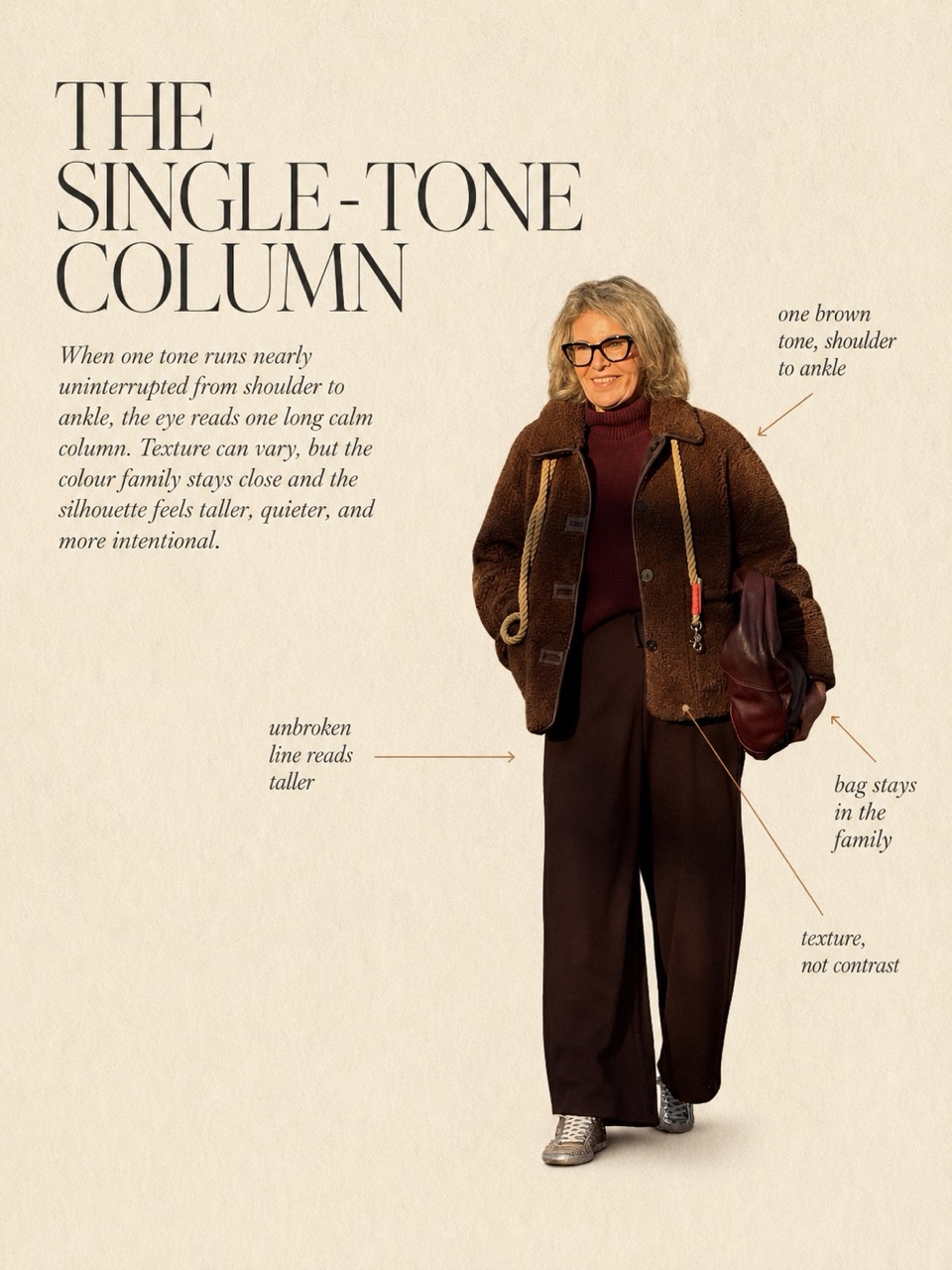
The most slimming trick in dressing has nothing to do with losing a single pound. She builds a column of one tone — all navy, shoulder to ankle; brown on brown; black on black. When your top and bottom belong to the same colour family, you stop cutting yourself in half. There is no hard horizontal line across the middle to chop the eye. Instead there is one long, unbroken vertical line, and the eye reads a long line as tall, as lean, as composed.
This is why the women who look the most expensive often wear the fewest colours in a single outfit. They are not being boring. They are drawing one clean line and letting the cut and the texture do the talking. To borrow it, pick one colour and dress in it from the shoulders down — and let the shapes and fabrics carry the interest, not a second and third colour.
“She is not changing to match the clothes. The clothes are bending to match her.”
Technique FiveThe Soft Armor
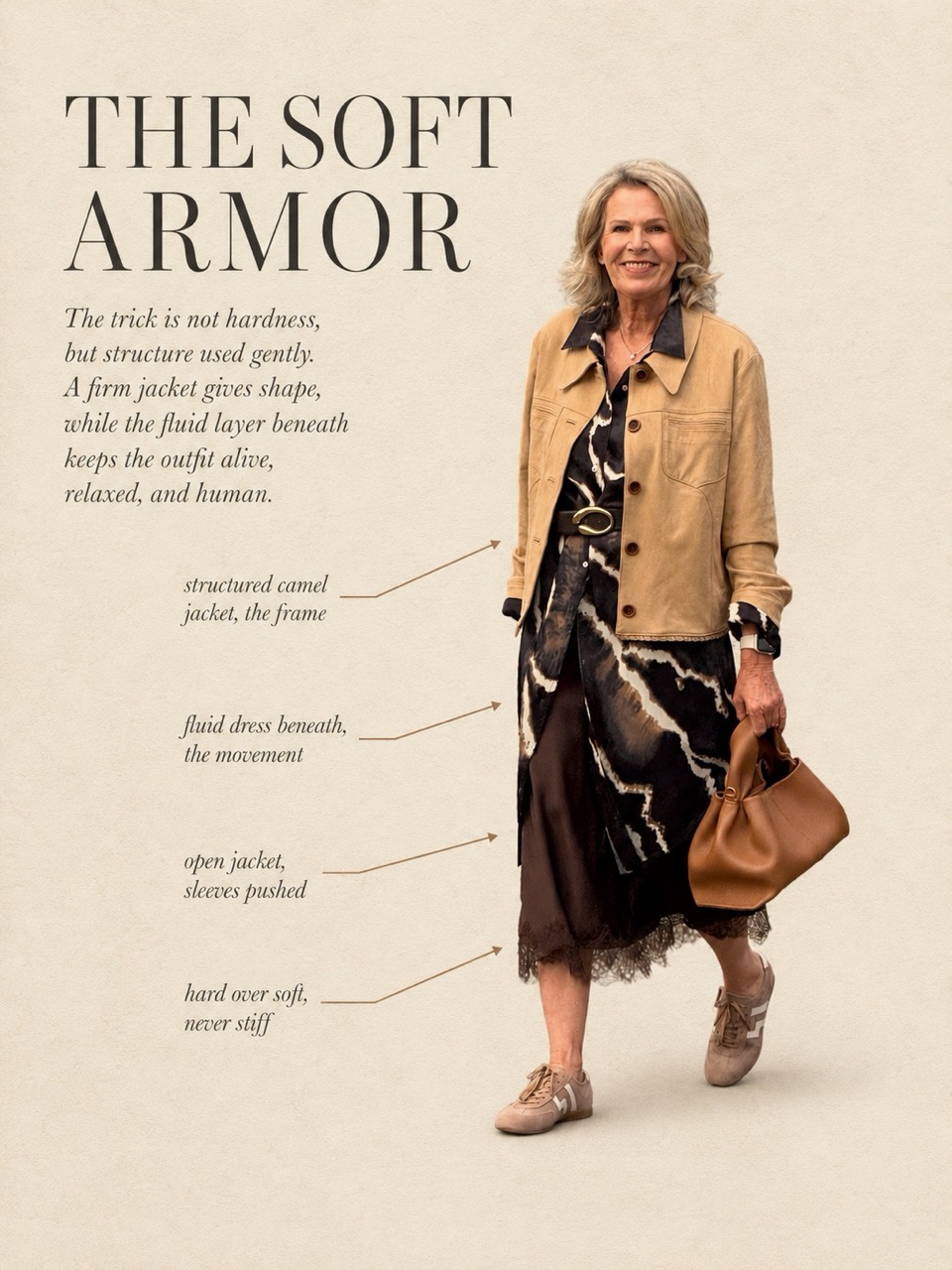
This is the difference between looking put together and looking braced for inspection. She almost never wears something rigid on its own. She layers a structured jacket over something soft and moving: a crisp camel jacket over a fluid printed dress, a long clean coat open over wide swishing trousers, a blazer relaxed over a soft tee. The structured piece gives the shoulders, the authority, the frame. The soft piece underneath keeps it human, approachable, in motion.
Hard over soft, frame over flow — you are never stiff and never sloppy, because you are wearing both at once. And notice the jacket is usually open, or pushed up at the sleeve, or simply thrown on. She wears the structure; the structure does not wear her. To borrow it, put your most structured jacket over your softest, most flowing piece, leave it open, and push the sleeves up. Armor, worn lightly.
Technique SixThe Flat Finish
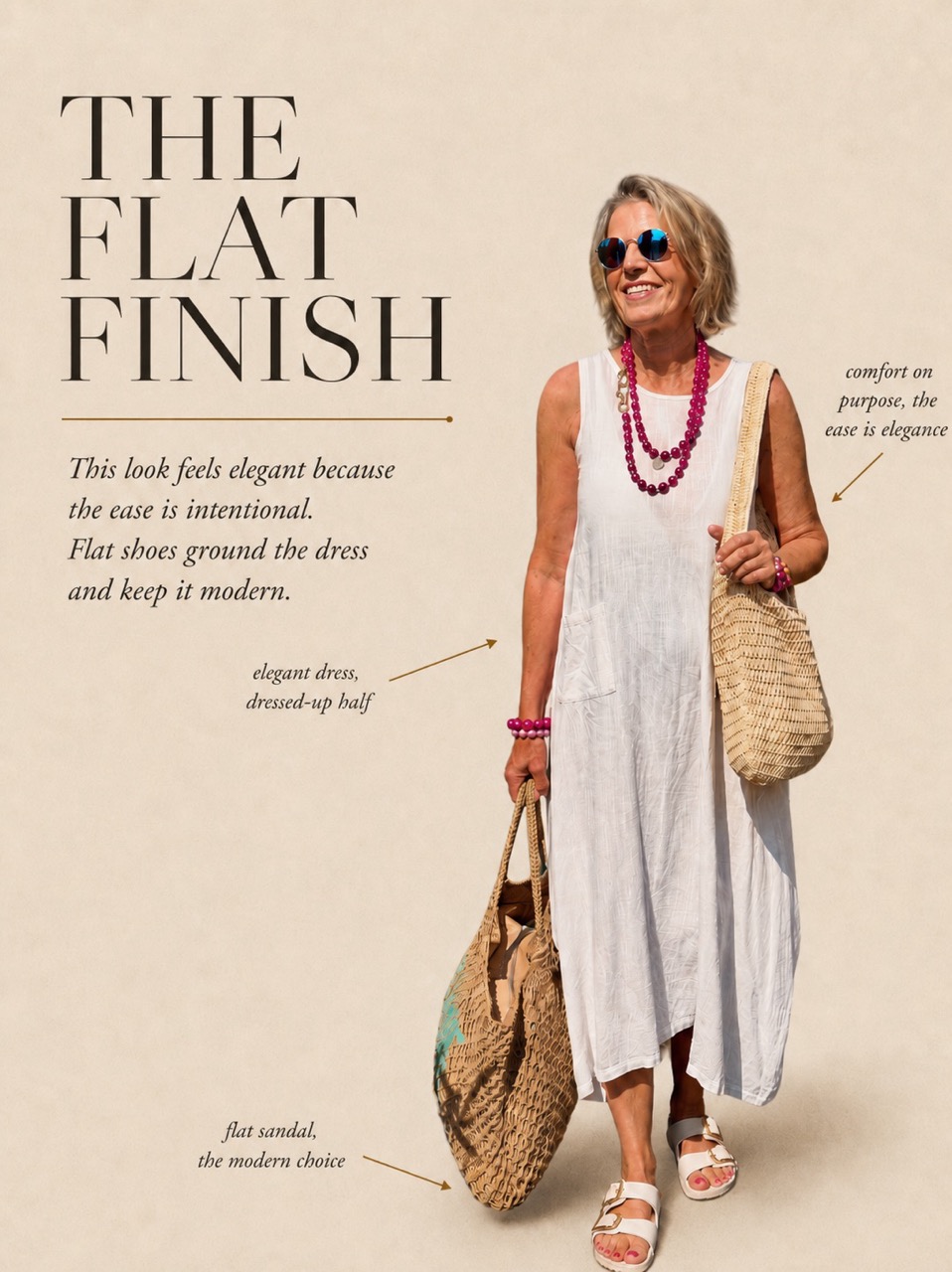
The smallest move, and perhaps the most modern. Look down, at her feet. An elegant dress — and a flat sandal. A column of navy linen — and clean white trainers. The old rule says an elegant outfit demands an elegant heel, that a proper dress is only finished by a raised, formal shoe. Sabine refuses the rule completely, and finishes a dressed-up look with the easiest shoe in the room.
The effect is not “less.” The effect is now. A flat sandal under a flowing dress says this is my real life, not a costume — I am dressed for me, not for an occasion that is judging me. That refusal to suffer for elegance is exactly why she looks free instead of formal. To borrow it, take the outfit you would normally save for heels and finish it with a flat you can actually walk a coastline in. The ease is the elegance.
The thing underneath all six
Go back through the looks and you will notice something the techniques alone do not explain. There is a thread running through every single one that no rule can teach: she is enjoying it. She is laughing, mid-stride, holding flowers or a coffee or a friend’s arm. Her own words again — sixty-four years young, ageing with joy. That is not decoration on top of the style. That is the style.
The six techniques are how the outfit is built. The joy is why it works. You can copy a colour block and anchor a print — but the reason it all looks effortless on her is that she is genuinely, visibly pleased to be exactly where she is, in exactly what she chose. That is the part the rules can never sell you, and never take from you.
Trends arrive, and trends die. Sabine is proof of the only thing underneath that lasts: a handful of decisions you can learn, and the decision to enjoy wearing them. So the next time the rules hand you that shorter and shorter list of what you are still allowed to wear — pick the colour you actually love, and go.
The Elegant Wardrobe System walks you through building a settled, personal wardrobe from what you already own — the same clear thinking behind all six techniques above.
Get the Elegant Wardrobe System — $49
Not sure where your outfits are losing it? Take the free quiz:
The six techniques are decoded from the personal style of Sabine (@soebine), featured with her permission; editorial illustrations are original. This post contains affiliate links — if you buy through them, Trends Spotted Fashion may earn a small commission, at no extra cost to you.